concentration

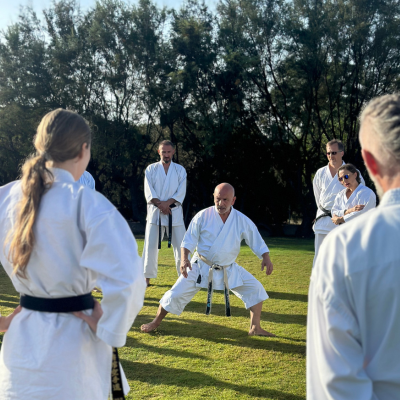
Karate helps children to control their attention, become calmer, and tackle tasks in training and at school with greater focus.

Self-confidence

Clear structures and measurable progress help children gain confidence in their behavior and develop trust in their own abilities.

respect

In karate, children learn discipline, mindfulness and respectful interaction – important foundations for positive social behavior in everyday life.

Why karate is good for children

Karate strengthens children – it promotes personality, focus and inner stability

Karate for children is much more than just a sport. It combines movement with clear values ​​and specifically supports personality development. Many parents are looking for ways to support their child's development – ​​whether it's with concentration difficulties, insecurity in their demeanor, or problems dealing with challenges. This is precisely where karate comes in.

Through established rituals, structured training routines, and achievable goals, children learn that progress comes through practice. They learn to take responsibility, respect rules, and persevere even in the face of setbacks. These experiences not only have an impact in the dojo but also strengthen their behavior in school, family, and social environments.

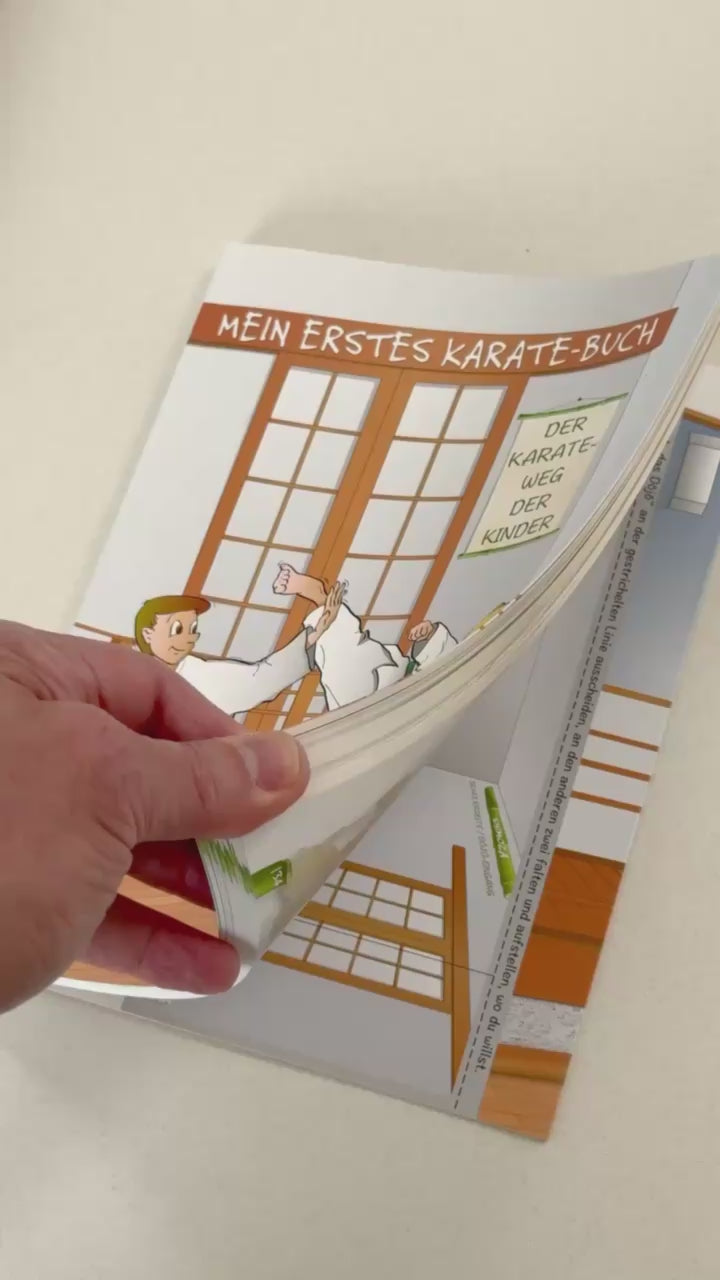
"My First Karate Book" by 7th Dan Fiore Tartaglia accompanies children on this journey. It conveys the fundamentals in an understandable and age-appropriate way and shows how technique and values ​​are connected. The focus is not only on learning movements, but also on the conscious development of posture, discipline, and inner strength.

At the same time, parents gain a sound understanding of the principles of karate and recognize how these can sustainably support their child's development. Often, this also leads to a (new) connection to karate for themselves – as an attitude in everyday life and as a conscious form of values-oriented guidance.

Anyone who wants to form their own opinion will find a practical introduction to this holistic approach in the sample reading.

Our readers

Voices of parents and karate practitioners

Very appealing. A very clear and nicely designed book, also suitable for adults.
tonic red
This book is great for young and old alike... it's very well explained...
kicki
Excellent. A very successful training companion for young karate beginners, both in terms of content and design. Highly recommended.
Paul Panther
A great recommendation from the karate instructor. The book is child-friendly and lovingly presents the first steps of karate. My child likes it – he said so when I asked – so I can recommend it from a child's perspective as well.
Martin H.
A very good introductory book. I ordered it because I was looking for a guide for my students where they could review what they've learned in training, and where parents could also understand what the children are saying at home. Great illustrations, very structured, and well explained. It's a shame it's exclusively for karate practitioners. Nevertheless, in my opinion as a children's trainer, it's a really good textbook that I'm happy to recommend.
Peggy Bening

    Playful • Understandable • Motivating

    The ideal companion for young karateka

    An age-appropriate karate book that safely guides children through their first years of training. With clearly structured explanations, over 400 detailed illustrations, and interactive elements, it teaches not only basic techniques but also the values ​​and principles of karate – in an understandable, practical, and motivating way.

    Order now

    Questions and answers

    About "My First Karate Book"

    For what age and level is the book suitable?

    This book is primarily aimed at children between the ages of seven and thirteen and is ideal for the first years of karate training. Beginners in children's karate, in particular, will benefit from the clear structure and the step-by-step introduction to kihon, kata, and kumite. The content is age-appropriate and accompanies young karateka from the very beginning to their first examinations. The topics grow with the children's training experience, supporting their long-term learning.

    What exactly do children learn in this karate book?

    The fundamentals of karate are taught in a clear and practical way. Children learn the meaning of key terms such as rei, mokusō, kime, and kiai, as well as important dojo rules and respectful conduct during training. Furthermore, technical basics such as stances, blocking techniques, and hand and foot techniques are explained clearly. Another focus is on preparing for belt examinations, setting personal goals, and exploring how karate can positively influence concentration, discipline, and academic learning.

    Is this book only suitable for Shōtōkan Karate?

    The examples are based on Shōtōkan Karate. However, the principles taught – such as alignment, body structure, tension, timing, and perception – are universally understood across styles. Trainers and karate practitioners from other styles report that the content can be easily transferred, as the focus is not on rigid forms but on fundamental movement principles and interrelationships within karate training.

    How does the book support children in learning independently?

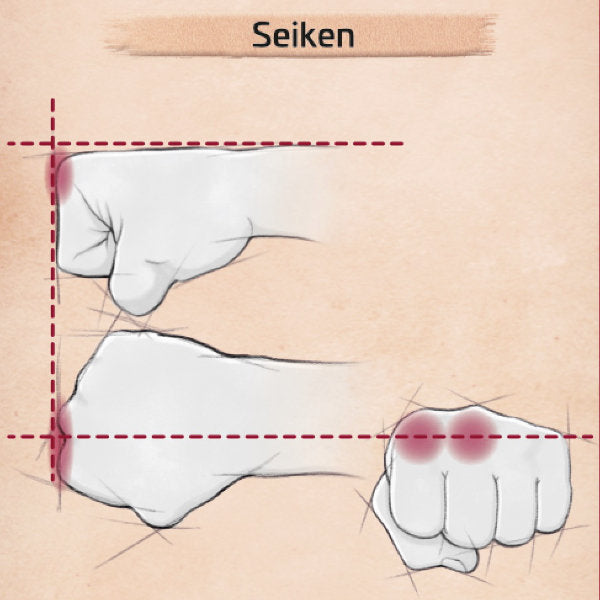
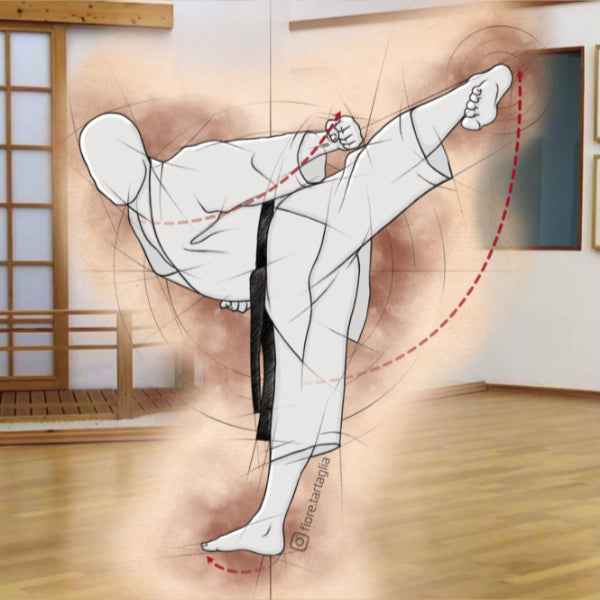
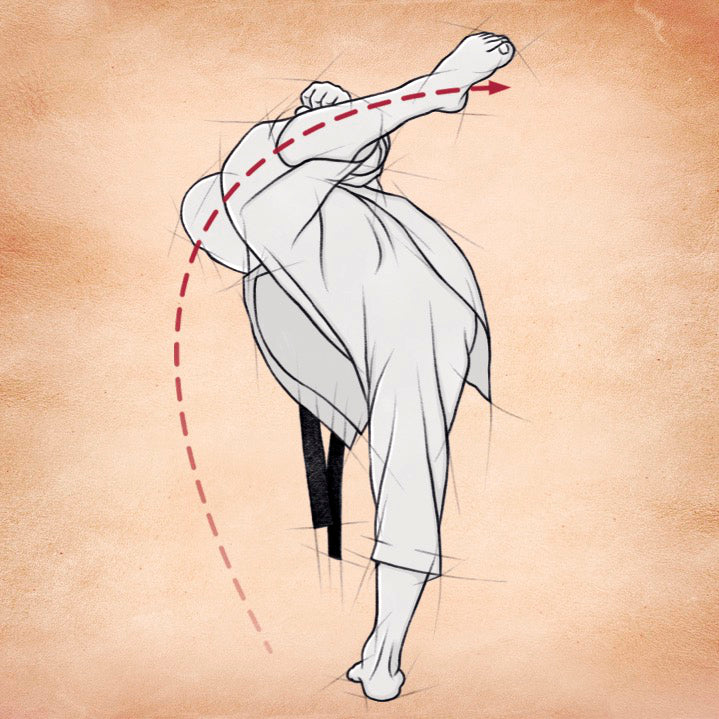
    Karate is not only explained, but also presented visually and methodically. Over 400 detailed drawings help children better understand movement sequences and correctly replicate techniques. The illustrations clearly depict complex sequences and facilitate practice at home.

    In addition, the book includes a personal karate journal for documenting progress. It promotes independence, enjoyment of learning, and sustained training motivation.

    Is the book only suitable for children – or also for parents and coaches?

    The book is intentionally structured to offer added value for parents, coaches, and clubs. Parents receive an accessible introduction to the principles of (children's) karate and can effectively support their child even without prior experience. Coaches will find a structured foundation for teaching techniques, terminology, and values ​​in a child-friendly way. Furthermore, the book is suitable for adults who wish to refresh their knowledge or consider karate from an educational perspective.

    Why does this book particularly support young karate practitioners?

    It combines technical instruction with personal development. Children not only learn how to execute movements, but also understand why values ​​such as discipline, respect, and perseverance play a central role in karate. This makes the training tangible, comprehensible, and applicable to everyday life.

    Why is it a book that grows with the child?

    This book is more than just a training guide. It accompanies children through several developmental stages and becomes a personal companion in their everyday karate practice. Progress can be documented, goals set, and one's own karate journey consciously shaped – from the first white belt to advanced techniques.

    About the author

    Fiore Tartaglia

    Fiore Tartaglia has practiced karate since his youth and has been teaching its principles at the highest level for decades. As a long-time Shōtōkan karateka, highly ranked instructor, and also a graphic designer and illustrator, he combines deep technical understanding with exceptional didactic clarity. His books are considered standard works for precise structure, visual comprehensibility, and sustainable development.

    Learn more
    The children's karate book accompanies young karateka safely, understandably and motivatingly through their first years of training – in the dojo, at school, at home and in everyday life in general.

    Basic karate principles for children, parents and trainers – understandable from the very beginning.

    Children experience how the values ​​of karate strengthen them in training, in everyday school life, and in their social environment. Step by step, they develop an inner attitude that has a lasting positive influence on their thoughts and actions.